The iconic Stegosaurus is known for its large size and distinct rows of staggered plates along its back. It was widely accepted that specimens with different plates represented different species of the large herbivore; some had short, wide circular plates while other had taller, ovular plates.
Evan Saitta, an undergraduate researcher at Bristol University, is the first to provide compelling evidence that the physical differences in plate size corresponded to gender, a differentiation known as sexual dimorphism.
Saitta challenged traditional thinking after six consecutive summers excavating a Stegosaurus mjosi 'graveyard' in Montana. After examining several different specimens, Saitta was unable to locate any other skeletal characteristics that would have indicated a difference in species - apart from plate size. Sexual dimorphism is the most plausible explanation for the variations in place shape and size.
"As males typically invest more in their ornamentation, the larger, wide plates likely came from males. These broad plates would have provided a great display surface to attract mates. The tall plates might have functioned as prickly predator deterrents in females," posits Saitta.
The first convincing evidence for sexual differences in a species of dinosaur has been described by University of Bristol MSc student, Evan Saitta, in a study of the iconic dinosaur Stegosaurus, published today in the scientific journal PLOS ONE.
Stegosaurus, a large, herbivorous dinosaur with two staggered rows of bony plates along its back and two pairs of spikes at the end of its tail, lived roughly 150 million years ago during the Late Jurassic in the western United States.
Some individuals had wide plates, some had tall, with the wide plates being up to 45 per cent larger overall than the tall plates. According to the new study, the tall-plated Stegosaurus and the wide-plated Stegosaurus were not two distinct species, nor were they individuals of different age: they were actually males and females.
Professor Michael Benton, Director of the Masters in Palaeobiology at the University of Bristol said: “Evan made this discovery while he was completing his undergraduate thesis atPrinceton University. It’s very impressive when an undergraduate makes such a major scientific discovery.”
Sexual dimorphism (a term used to describe distinct anatomical differences between males and females of the same species) is common in living animals – think of the manes of lions or the antlers of deer – yet is surprisingly difficult to determine in extinct species.
Despite many previous claims of sexual dimorphism in dinosaurs, current researchers find them to be inconclusive because they do not rule out other possible explanations for why differences in anatomy might be present between fossil specimens. For example, two individuals that differ in anatomy might be two separate species, a young and an old individual, or a male and a female individual.
Having spent six summers in central Montana as part of an excavation crew digging up the first ever Stegosaurus ‘graveyard’, Evan Saitta was able to test these alternative explanations and others in the species Stegosaurus mjosi.
The group of dinosaurs excavated in Montana demonstrated the coexistence of individuals that only varied in their plates. Other skeletal differences indicating separation of ecological niches would have been expected if the two were different species.
The study also found that the two varieties were not a result of growth. CT scanning at Billings Clinic in Montana, as well as thin sections sampled from the plates for microscope analysis, showed that the bone tissues had ceased growing in both varieties. Neither type of plate was in the process of growing into the other.
With other possibilities ruled out, the best explanation for the two varieties of plates is that one type belonged to males and the other, females.
Speculating about which is which, Evan Saitta said: “As males typically invest more in their ornamentation, the larger, wide plates likely came from males. These broad plates would have provided a great display surface to attract mates. The tall plates might have functioned as prickly predator deterrents in females.”
Stegosaurus may not have been the only dinosaur to exhibit sexual dimorphism. Other species showed extra-large crests or nose horns, which were potentially sexual features. Male animals often fight or display for mates, just like red deer or peacocks today.
Not only does Saitta’s work show that dinosaurs exhibited sexual dimorphism, it suggests that the ornamentation of at least some species was used for sexual display.
The presence of sexual dimorphism in an extinct species can provide scientists with a much clearer picture of its behaviour than would otherwise be possible.
As soon as you finally start feel caught up, something brand new comes along and changes the game. Just as 3-D printing is starting to penetrate the mainstream, researchers at Australia's University of Wollongong are busy developing the its next iteration, 4-D printing.
The two processes are not dissimilar; a 4-D printer functions similarly to its three-dimensional predecessor. A 4-D printer, however, produces materials that are able to transform in response to external stimuli, like heat or pressure.
Wollongong researcher Marc in het Panhuis' first project entailed printing a valve that clamps shut when surrounding water reachers a certain temperature, an innovation that could prove to be valuable to the field of soft robotics.
"The cool thing about it is, is it's a working functioning device that you just pick up from the printer," remarked in het Panhuis. "There's no other assembly required. It's an autonomous valve, there's no input necessary other than water; it closes itself when it detects hot water," he said.
4D printing is unfolding as technology that takes 3D printing to an entirely new level.
The fourth dimension is time, shape shifting in fact, and the ARC Centre of Excellence for Electromaterials Science (ACES) at the University of Wollongong is helping to set the pace in the next revolution in additive manufacturing.
Just as the extraordinary capabilities of 3D printing have begun to infiltrate industry and the family home, researchers have started to develop 3D printed materials that morph into new structures, post production, under the influence of external stimuli such as water or heat - hence the name, 4D printing.
So, as in 3D printing, a structure is built up layer by layer into the desired shape, but these new materials are able to transform themselves from one shape into another, much like a child’s Transformer toy.
This ground-breaking science promises advancement in myriad fields – medicine, construction, automation and robotics to name a few.
ACES researchers have turned their attention to the medical field of soft robotics, manufacturing a valve that actuates in response to its surrounding water’s temperature.
ACES Professor Marc in het Panhuis said it was the cleverness of the valve’s creation that was remarkable.
"The cool thing about it is, is it’s a working functioning device that you just pick up from the printer," he said.
"There’s no other assembly required."
The materials scientist said the valve, a 3D printed structure, possessed actuators that are activated solely by water.
"So it’s an autonomous valve, there’s no input necessary other than water; it closes itself when it detects hot water," he said.
The ACES Chief Investigator said the ACES group was the first to combine printing a 4D device with four different cartridges simultaneously, while using tough gels with the incorporated actuating materials.
Authors Shannon Bakarich (PhD candidate), Doctor Robert Gorkin III, Professor Marc in het Panhuis and Professor Geoff Spinks have published the work in Macromolecular Rapid Communications under the title 4D Printing with Mechanically Robust, Thermally Actuating Hydrogels.
NASA earlier this week announced the formation of an interdisciplinary task force dedicated to investigating the possibility of life beyond our solar system.
Known as the Nexus for Exoplanet System Science, or "NExSS", the group will investigate the habitability of the more than 1,000 exoplanets that have been identified. Experts in the fields of earth science, planetary science, astrophysics and heliophysics (the physics of the Sun) will comprise the team.
"This interdisciplinary endeavor connects top research teams and provides a synthesized approach in the search for planets with the greatest potential for signs of life," remarked Jim Green, NASA's Director of Planetary Science. "The hunt for exoplanets is not only a priority for astronomers, it's of keen interest to planetary and climate scientists as well."
NASA's own Natalie Batalha, Dawn Gelino and Anthony del Genio will helm the coalition. They will be joined by researchers from 12 different universities and institutions.
NASA is bringing together experts spanning a variety of scientific fields for an unprecedented initiative dedicated to the search for life on planets outside our solar system.
The Nexus for Exoplanet System Science, or “NExSS”, hopes to better understand the various components of an exoplanet, as well as how the planet stars and neighbor planets interact to support life.
“This interdisciplinary endeavor connects top research teams and provides a synthesized approach in the search for planets with the greatest potential for signs of life,” says Jim Green, NASA’s Director of Planetary Science. “The hunt for exoplanets is not only a priority for astronomers, it’s of keen interest to planetary and climate scientists as well.”
The study of exoplanets – planets around other stars – is a relatively new field. The discovery of the first exoplanet around a star like our sun was made in 1995. Since the launch of NASA’s Kepler space telescope six years ago, more than 1,000 exoplanets have been found, with thousands of additional candidates waiting to be confirmed. Scientists are developing ways to confirm the habitability of these worlds and search for biosignatures, or signs of life.
The key to this effort is understanding how biology interacts with the atmosphere, geology, oceans, and interior of a planet, and how these interactions are affected by the host star. This “system science” approach will help scientists better understand how to look for life on exoplanets.
NExSS will tap into the collective expertise from each of the science communities supported by NASA’s Science Mission Directorate:
Earth scientists develop a systems science approach by studying our home planet.
Planetary scientists apply systems science to a wide variety of worlds within our solar system.
Heliophysicists add another layer to this systems science approach, looking in detail at how the Sun interacts with orbiting planets.
Astrophysicists provide data on the exoplanets and host stars for the application of this systems science framework.
NExSS will bring together these prominent research communities in an unprecedented collaboration, to share their perspectives, research results, and approaches in the pursuit of one of humanity’s deepest questions: Are we alone?
The team will help classify the diversity of worlds being discovered, understand the potential habitability of these worlds, and develop tools and technologies needed in the search for life beyond Earth.
Dr. Paul Hertz, Director of the Astrophysics Division at NASA notes, “NExSS scientists will not only apply a systems science approach to existing exoplanet data, their work will provide a foundation for interpreting observations of exoplanets from future exoplanet missions such as TESS, JWST, and WFIRST.” The Transiting Exoplanet Survey Satellite (TESS) is working toward a 2017 launch, with the James Webb Space Telescope (JWST) scheduled for launch in 2018. The Wide-field Infrared Survey Telescope is currently being studied by NASA for a launch in the 2020’s.
NExSS will be led by Natalie Batalha of NASA’s Ames Research Center, Dawn Gelino with NExScI, the NASA Exoplanet Science Institute, and Anthony del Genio of NASA’s Goddard Institute for Space Studies. The NExSS project will also include team members from 10 different universities and two research institutes. These teams were selected from proposals submitted across NASA’s Science Mission Directorate.
The Berkeley/Stanford University team is led by James Graham. This "Exoplanets Unveiled" group will focus on this question: “What are the properties of exoplanetary systems, particularly as they relate to their formation, evolution, and potential to harbor life?”
Daniel Apai leads the “Earths in Other Solar Systems” team from the University of Arizona. The EOS team will combine astronomical observations of exoplanets and forming planetary systems with powerful computer simulations and cutting-edge microscopic studies of meteorites from the early solar system to understand how Earth-like planets form and how biocritical ingredients — C, H, N, O-containing molecules — are delivered to these worlds.
The Arizona State University team will take a similar approach. Led by Steven Desch, this research group will place planetary habitability in a chemical context, with the goal of producing a “periodic table of planets”. Additionally, the outputs from this team will be critical inputs to other teams modeling the atmospheres of other worlds.
Researchers from Hampton University will be exploring the sources and sinks for volatiles on habitable worlds. The “Living, Breathing Planet Team," led by William B. Moore, will study how the loss of hydrogen and other atmospheric compounds to space has profoundly changed the chemistry and surface conditions of planets in the solar system and beyond. This research will help determine the past and present habitability of Mars and even Venus, and will form the basis for identifying habitable and eventually living planets around other stars.
The team centered at NASA’s Goddard Institute for Space Studies will investigate habitability on a more local scale. Led by Tony Del Genio, it will examine the habitability of solar system rocky planets through time, and will use that foundation to inform the detection and characterization of habitable exoplanets in the future.
The NASA Astrobiology Institute's Virtual Planetary Laboratory, based at the University of Washington, was founded in 2001 and is a heritage team of the NExSS network. This research group, led by Dr. Victoria Meadows, will combine expertise from Earth observations, Earth system science, planetary science, and astronomy to explore factors likely to affect the habitability of exoplanets, as well as the remote detectability of global signs of habitability and life.
Five additional teams were chosen from the Planetary Science Division portion of the Exoplanets Research Program (ExRP). Each brings a unique combination of expertise to understand the fundamental origins of exoplanetary systems, through laboratory, observational, and modeling studies.
A group led by Neal Turner at NASA’s Jet Propulsion Laboratory, California Institute of Technology, will work to understand why so many exoplanets orbit close to their stars. Were they born where we find them, or did they form farther out and spiral inward? The team will investigate how the gas and dust close to young stars interact with planets, using computer modeling to go beyond what can be imaged with today's telescopes on the ground and in space.
A team at the University of Wyoming, headed by Hannah Jang-Condell, will explore the evolution of planet formation, modeling disks around young stars that are in the process of forming their planets. Of particular interest are “transitional” disks, which are protostellar disks that appear to have inner holes or regions partially cleared of gas and dust. These inner holes may be caused in part by planets inside or near the holes.
A Penn State University team, led by Eric Ford, will strive to further understand planetary formation by investigating the bulk properties of small transiting planets and implications for their formation.
A second Penn State group, with Jason Wright as principal investigator, will study the atmospheres of giant planets that are transiting hot Jupiters with a novel, high-precision technique called diffuser-assisted photometry. This research aims to enable more detailed characterization of the temperatures, pressures, composition, and variability of exoplanet atmospheres.
The University of Maryland and NASA’s Goddard Space Flight Center team, with Wade Henning at the helm, will study tidal dynamics and orbital evolution of terrestrial class exoplanets. This effort will explore how intense tidal heating, such as the temporary creation of magma oceans, can actually save Earth-sized planets from being ejected during the orbital chaos of early solar systems.
Another University of Maryland project, led by Drake Deming, will leverage a statistical analysis of Kepler data to extract the maximum amount of information concerning the atmospheres of Kepler's planets.
The group led by Hiroshi Imanaka from the SETI Institute will be conducting laboratory investigation of plausible photochemical haze particles in hot, exoplanetary atmospheres.
The Yale University team, headed by Debra Fischer, will design new spectrometers with the stability to reach Earth-detecting precision for nearby stars. The team will also make improvements to Planet Hunters, www.planethunters.org, a web interface that allows citizen scientists to search for transiting planets in the NASA Kepler public archive data. Citizen scientists have found more than 100 planets not previously detected; many of these planets are in the habitable zones of host stars.
A group led by Adam Jensen at the University of Nebraska-Kearney will explore the existence and evolution of exospheres around exoplanets, the outer, ‘unbound’ portion of a planet's atmosphere. This team previously made the first visible light detection of hydrogen absorption from an exoplanet's exosphere, indicating a source of hot, excited hydrogen around the planet. The existence of such hydrogen can potentially tell us about the long-term evolution of a planet's atmosphere, including the effects and interactions of stellar winds and planetary magnetic fields.
From the University of California, Santa Cruz, Jonathan Fortney’s team will investigate how novel statistical methods can be used to extract information from light which is emitted and reflected by planetary atmospheres, in order to understand their atmospheric temperatures and the abundance of molecules.
A devastating earthquake ravaged Nepal on Saturday morning, killing almost 4,000 people across four countries. The death toll is expected to rise significantly as rescuers reach remote, outlying areas affected by the quake.
"Our village has been almost wiped out. Most of the houses are either buried by landslide or damaged by shaking," Vim Tamang, a local resident, told CBS News. "All the villagers have gathered in the open area. We don't know what to do. We are feeling helpless."
The magnitude 7.8 quake is the worst to hit the nation in 81 years, and could be felt as far away as New Delhi. Centered 50 miles northwest of densely populated Kathmandu, it struck at 11:56 A.M. local time (2:11 A.M. EDT). CNN reports that the quake struck at a depth of only 9.3 miles, making it much more destructive than a deeper quake would have been.
A magnitude 6.6 aftershock followed an hour later; the United States Geological Survey has since recorded 18 aftershocks of varying magnitudes.
The quake triggered an avalanche on Mount Everest (which lies precisely along the Nepal-China border) that killed at least 8 climbers and injured 30 more. It struck near the Khumbu Icefall, a spot notorious among climbers for its treacherous terrain.
Centuries-old temples and buildings throughout the region were destroyed, including the iconic Bhimsen Tower.
We will continue to update this page with news about this humanitarian crisis and ways the Discovery community can support the Nepali people and international relief efforts.
KATHMANDU, Nepal -- Tens of thousands of people spent the night in the open under a chilly and thunderous sky after a powerful earthquake devastated Nepal on Saturday, killing at least 1,800 across the region, collapsing modern houses and ancient temples and triggering a landslide onMount Everest. Officials warned the death toll would rise as more reports came in from far-flung areas.
Strong aftershocks continued to jolt the region as the rescue operation got into full swing at daybreak Sunday, with workers sending out tents and relief supplies in trucks and helicopters. Most areas were without power and water.
The death toll had reached 1,430, including 348 in Kathmandu alone, said Inspector Yuvraj Khadka of Nepal's national police force. The magnitude 7.8 earthquake, which originated outside the capital, was the worst tremor to hit the poor South Asian nation in over 80 years. It was strong enough to be felt all across the northern part of neighboring India, Bangladesh, Tibet and Pakistan, where a total of 60 people died.
"There were at least three big quakes at night and early morning. How can we feel safe? This is never-ending and everyone is scared and worried," said Sundar Sah. "I hardly got much sleep. I was waking up every few hours and glad that I was alive."
As Nepal trembled, residents fled homes and buildings in panic. Walls tumbled, trees swayed, power lines came crashing down and large cracks opened up on streets and walls. Clouds of dust began to swirl all around.
World Vision's Deepesh Paul Thaka said he was lucky to survive, according to CBS News correspondent Charlie D'agata.
"I can tell you it was a very horrifying situation," he said. "We were barely able to make it outside the house. We held each other tight, just praying, witnessing the walls just outside our house collapsing."
Within hours of the quake, hospitals had filled up with hundreds of injured people, and by Sunday, their numbers swelled to nearly 5,000. With organized relief and rescue lacking, many survivors were brought to hospitals by friends and relatives in motorized rickshaws, flatbed trucks and cars. Residents used their bare hands, crowbars and other tools to dig through rubble and rescue survivors.
More than two dozen aftershocks jolted the area after the first quake, which struck just before noon. At the time, Shrish Vaidya, who runs an advertising agency, was in his two-story house outside Kathmandu with his parents.
"It is hard to describe. The house was shaking like crazy. We ran out and it seemed like the road was heaving up and down," Vaidya, 46, told The Associated Press. "I don't remember anything like this before. Even my parents can't remember anything this bad."
Once the first shaking stopped, Vaidya thought his family could return indoors by evening. But the jolts kept coming, and they felt safer outdoors.
"It's cold and windy so we are all sitting in the car listening to the news on FM radio," he said. "The experts are saying it's still not safe to go back inside. No one can predict how big the next aftershock will be."
So the family ate dinner outside with the headlights of their car providing light. Vaidya was grateful his wife and 10-year-old son were on holiday in the U.S.
In his largely affluent neighborhood of low-rise, sturdy homes in suburban Kathmandu the damage was relatively light. In other parts of the city where the buildings are older and poorly built people were not as lucky.
Forecasts called for rain and thunder showers Sunday and the temperatures were in the mid-50s (14 Celsius), cold enough to make camping outside uncomfortable.
Emergency rescue workers carry a victim on a stretcher after Dharahara Tower collapsed from an earthquake April 25, 2015, in Kathmandu, Nepal.
OMAR HAVANA/GETTY IMAGES
More than two dozen aftershocks jolted the area after the first quake, which struck just before noon. At the time, Shrish Vaidya, who runs an advertising agency, was in his two-story house outside Kathmandu with his parents.
"It is hard to describe. The house was shaking like crazy. We ran out and it seemed like the road was heaving up and down," Vaidya, 46, told The Associated Press. "I don't remember anything like this before. Even my parents can't remember anything this bad."
Once the first shaking stopped, Vaidya thought his family could return indoors by evening. But the jolts kept coming, and they felt safer outdoors.
"It's cold and windy so we are all sitting in the car listening to the news on FM radio," he said. "The experts are saying it's still not safe to go back inside. No one can predict how big the next aftershock will be."
So the family ate dinner outside with the headlights of their car providing light. Vaidya was grateful his wife and 10-year-old son were on holiday in the U.S.
In his largely affluent neighborhood of low-rise, sturdy homes in suburban Kathmandu the damage was relatively light. In other parts of the city where the buildings are older and poorly built people were not as lucky.
Forecasts called for rain and thunder showers Sunday and the temperatures were in the mid-50s (14 Celsius), cold enough to make camping outside uncomfortable.
Thousands of people spent the night at Tudikhel, a vast open ground in the middle of Kathmandu, just next to the old city that is lined with historic buildings and narrow lanes. Now it is in ruins.
"We hardly slept through the night. It was cold and it rained briefly and it was uncomfortable, but I am glad I brought my family out to the open," said Ratna Singh, a vegetable vendor who was cuddled under a blanket with his wife and son."
"At least I knew my family were safe. Every time the ground shook at night, I thanked god my family were there with me and safe. I don't think I am going to be sleeping inside the house anytime soon. We are all petrified."
Nepalese people walk past collapsed buildings at Lalitpur, on the outskirts of Kathmandu, Nepal, April 25, 2015.
PRAKASH MATHEMA/AFP/GETTY IMAGES
People lay on plastic sheets or cardboard boxes, wrapped in blankets. Mothers kept their children warm; some lit fire with whatever wood they could find. Most were eating instant noodles and cookies.
Prime Minister Sushil Koirala, who was attending a summit in Jakarta, tried to rush back home but made it as far as Bangkok where his connecting flight to Kathmandu was canceled because the capital's international airport was shut down for commercial flights.
Indian Air Force planes were allowed to bring in 43 tons of relief material, including tents and foods, and nearly 200 rescuers, India's External Affairs Ministry spokesman Vikas Swarup said. The planes were returning to New Delhi with Indian nationals who were stranded in Kathmandu. India's state-run Air India announced that it would begin relief flights Sunday.
Hospitals in the Kathmandu Valley were overcrowded, running out of room for storing dead bodies and running out of emergency supplies, the United Nations said in a statement.
"The reports of the devastation are still coming in and the numbers of people killed, injured and affected by this earthquake continue to rise," U.N. chief Ban Ki-Moon said. "It is clear that very many lives have been lost. There has also been significant damage to Nepal's irreplaceable cultural heritage."
While the extent of the damage and the scale of the disaster were yet to be known, the quake will likely put a huge strain on the resources of this poor country best known for Everest, the highest mountain in the world, and its rich Hindu culture. The economy of Nepal, a nation of 27.8 million people, relies heavily on tourism, principally trekking and Himalayan mountain climbing.
A mountaineering guide, Ang Tshering, said an avalanche after the quake swept base camp where expeditions were preparing to scale Everest, flattening tents and killing at least 10 climbers and guides and leaving an unknown number injured and missing and others cut off. Their nationalities were not immediately known.
Carsten Lillelund Pedersen, a Dane who was climbing the Everest with a Belgian, Jelle Veyt, said on his Facebook page that they were at Khumbu Icefall , a rugged area of collapsed ice and snow close to base camp at 5,000 meters (16,500 feet) when the earthquake hit.
"Right now, it is pretty chaotic and we try to help those injured," he said.
Norwegian climber Teodor Glomnes Johansen said that people at base camp were working on saving lives.
"All those who are unharmed organize help with the rescue efforts. Men, women and Sherpas are working side by side. The job right now is to assist the doctors in the camp here," he told Norway's VG newspaper.
The U.S. Geological Survey put the magnitude of the quake at 7.8. It said the quake hit at 11:56 a.m. local time (0611 GMT) at Lamjung, about 80 kilometers (50 miles) northwest of Kathmandu. Its depth was only 11 kilometers (7 miles), the largest shallow quake since the 8.2 temblor off the coast of Chile on April 1, 2014.
The shallower the quake the more destructive power it carries.
A magnitude 7 quake is capable of widespread and heavy damage while an 8 magnitude quake can cause tremendous damage. This means Saturday's quake - with the same magnitude as the one that hit San Francisco in 1906 - was about 16 times more powerful than the 7.0 quake that devastated Haiti in 2010.
The quake occurred at the boundary between the two pieces, or plates, of Earth's crust, one of which supports India to the south and the other Eurasia to the north. The Indian plate is moving at 45 millimeters (1.7 inches) a year under the Eurasian plate, and this results in earthquakes once every 500 year on an average, said Marin Clark, a geophysicist at University of Michigan, Ann Arbor.
So the quake was "definitely not a surprise," she said. Over millions of years, such quakes have led to the uplift of the Himalayas. Nepal suffered its worst recorded earthquake in 1934, which measured 8.0 and all but destroyed the cities of Kathmandu, Bhaktapur and Patan.
The power of Saturday's tremors brought down several buildings in the center of the capital, the ancient Old Kathmandu, including centuries-old temples and towers.
Among them was the nine-story Dharahara Tower, one of Kathmandu's landmarks built by Nepal's royal rulers as a watchtower in the 1800s and a UNESCO-recognized historical monument. It was reduced to rubble and there were reports of people trapped underneath.
Hundreds of people buy tickets on weekends to go up to the viewing platform on the eighth story, but it was not clear how many were up there when the tower collapsed. Video footage showed people digging through the rubble of the tower, looking for survivors.
The Kathmandu Valley is listed as a World Heritage site and is a collection of seven locations around Nepal's capital that reflect the country's rich religious history. The Buddhist stupas, public squares and Hindu temples are some of the most well-known sites in Kathmandu, and now some of the most deeply mourned.
The head of the U.N. cultural agency, Irina Bokova, said in a statement that UNESCO was ready to help Nepal rebuild from "extensive damage, including to historic monuments and buildings of the Kathmandu Valley."
Nepali journalist and author Shiwani Neupane tweeted: "The sadness is sinking in. We have lost our temples, our history, the places we grew up."
Saturday, the U.S. Embassy in Nepal was conducting accountability checks of U.S. citizens and issued an emergency message advising American citizens to shelter in place if they're in a safe location.
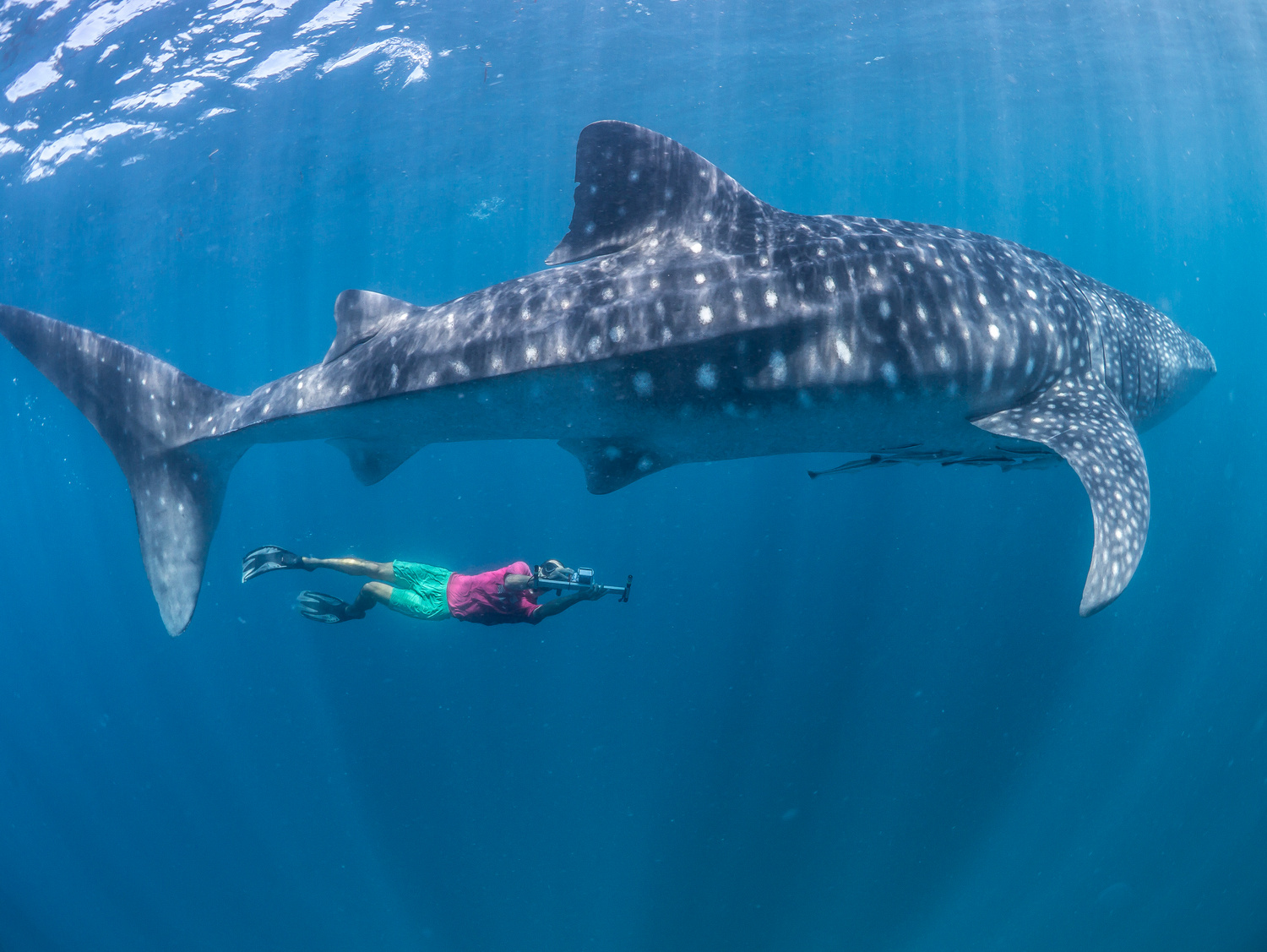
It can be difficult to get basic measurement information from the whale shark, the world's largest known fish - you can't exactly swim up to it with a measuring tape.
Researchers from Australia's Marine Megafauna Foundation are using a new measuring technique called "laser photogrammetry" that's giving them more accurate data than ever before.
According to lead researcher Chris A. Rohner, laser photogrammetry involves "projecting laser pointers onto the flank of the shark while taking a photo to provide a scale bar". His team deployed the method on live, free-swimming sharks in Mozambique as part of anew study recently published in PeerJ.
The new method could prove integral in helping conservationists protect the threatened whale shark. Rohner notes that the majority of the whale sharks observed by his team are juvenile males; there have been few sightings of newborns, mature sharks and females. Laser photogrammetry could significantly improve the scientific community's understanding of whale shark demographics and contribute to conservation efforts.
Christoph Roher taking a laser photogrammetry photo of a male whale shark’s claspers, to determine size at maturity. Credit: Simon Pierce
PJ: Can you tell us a bit about your team?
CR: We’re quite international! Simon Pierce, Clare Prebble, Andrea Marshall and myself work with the Marine Megafauna Foundation, and were based in Mozambique during the majority of data collection for this study. Simon, Clare and I did the bulk of the fieldwork together in Mozambique and Tanzania. Anthony Richardson, Mike Bennett and Scarla Weeks are from the University of Queensland in Australia, and together with Simon they formed my PhD supervisory team. Geremy Cliff and Sabine Wintner from the KwaZulu-Natal Sharks Board provided additional data from stranded whale sharks along the South African coast.
PJ: Can you briefly explain the research you published in PeerJ?
CR: We measured live, free-swimming whale sharks with laser photogrammetry – basically projecting laser pointers onto the flank of the shark while taking a photo to provide a scale bar. This technique provides more accurate size estimates than visual estimates. We found that male whale sharks reach maturity at over 9 m in length, around 2 m longer than those found in the Atlantic, suggesting biological differences among these populations. We also found that grow rates over a 1–3 year time-scale could not be measured with the technique. We likely need an improved technique of measuring whale sharks, or a longer time interval between re-measurements, to accurately determine the presumably slow growth rate of the species.
Chrisoph Rohner measuring a whale shark in Tanzania with laser photogrammetry. Credit: Simon Pierce
PJ: Do you have any anecdotes about this research?
CR: The three sharks that stranded on a beach in southern Mozambique were actually my very first whale shark encounters. I had just arrived in Mozambique ready for my (in-water) fieldwork, when we heard about the stranding. We drove by 4WD over bumpy, sandy tracks to get the remote beach and made on-site dissections continuing late into the night to beat the approaching high tide. It was an interesting start to this study, and thankfully I got the chance to swim with many live whale sharks since then.
PJ: What kinds of lessons do you hope the public takes away from the research?
CR: The whale shark is the largest fish in the ocean and, compared to many other sharks, it is relatively well studied. That being said, we still have some big gaps in our knowledge of their biology. The infographic below nicely illustrates that almost all of the sharks seen in their known feeding areas are juveniles, with a strong male bias. Where are the newborn whale sharks? Where are the females? Where are the large, mature adults? It is an exciting time to be a whale shark researcher, as we are getting closer to answering some of these big questions.
Demographic infographic on whale sharks
PJ: Can you briefly explain the demographic infographic on whale sharks?
CR: The main point of the infographic is to compare the size and sex structure of whale sharks at their aggregations around the world. The big question mark at the higher end of the size spectrum is to point out that we don’t see many big, mature sharks at these aggregations. There is also empty space at the lower end of the spectrum – whale sharks are born at ~50–60 cm in length, yet we only see them when they are >200 cm long.
PJ: How did you first hear about PeerJ, and what persuaded you to submit to us?
CR: Some of our colleagues published with PeerJ and recommended the journal due to the quick turn around and open access policy, so we gave it a go.
PJ: How would you describe your experience of our submission/review process?
CR: The publication process we had with PeerJ was smooth and fast. Our initial Editor went to Antarctica, but PeerJ quickly found a replacement to keep the process going in his absence.
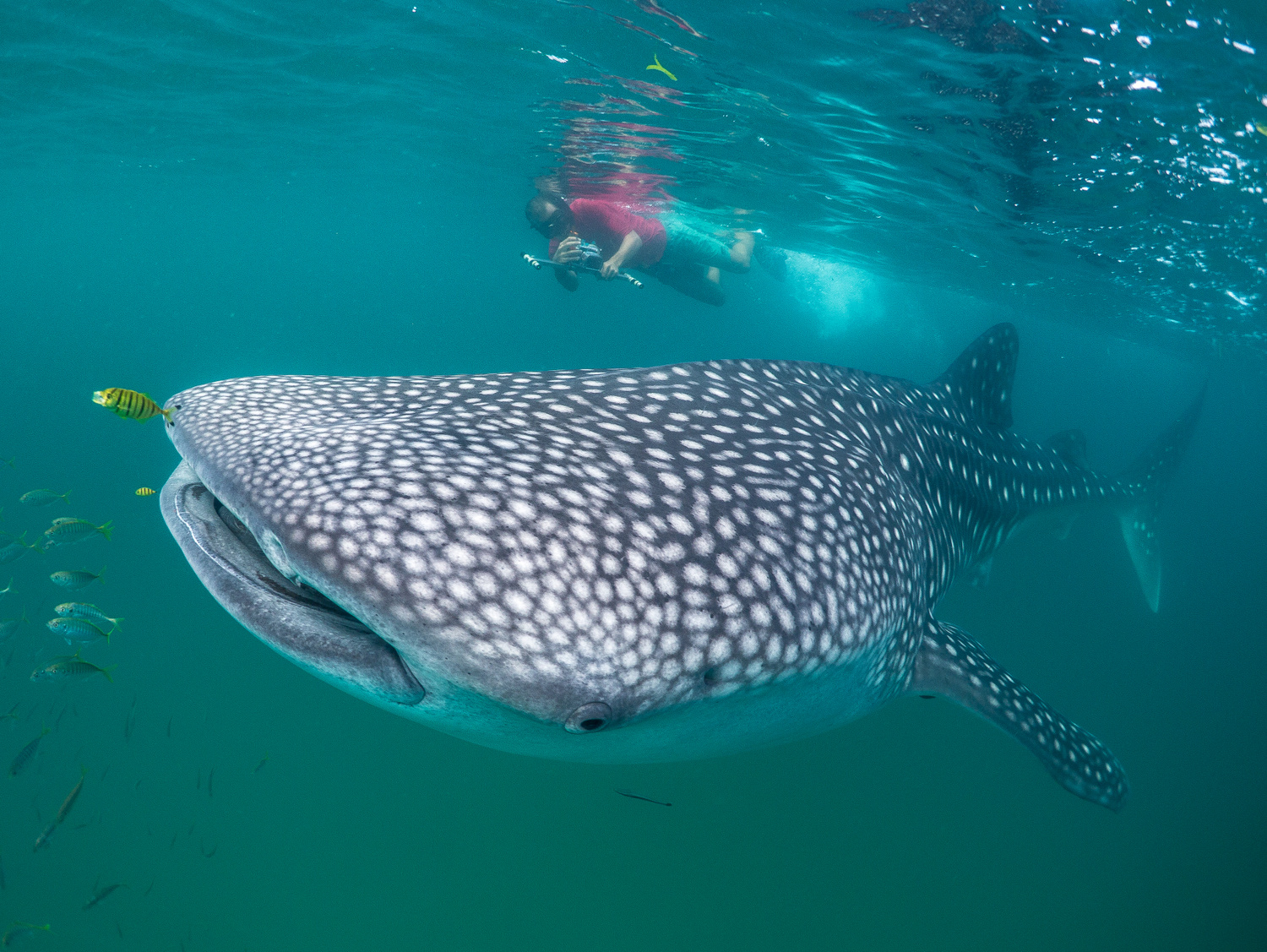
Whale Shark. Credit: Simon Pierce
PJ: Would you submit again, and would you recommend that your colleagues submit?
CR: Yes to both questions. Having an Open Access option is one of the major considerations for us when selecting and outlet for our work, as we want to quickly share our findings with colleagues and managers. Working for a small non-profit organisation means we have to be cautious with our finances, and PeerJ combines these two considerations nicely.


 The fourth dimension is time, shape shifting in fact, and the ARC Centre of Excellence for Electromaterials Science (ACES) at the University of Wollongong is helping to set the pace in the next revolution in additive manufacturing.